Followers

Tuesday, October 18, 2016

EXPOSITION : "Miroir du Désir" – Images de femmes dans l'estampe japonaise, Paris.

Lors de mes nombreux passages à Paris, comme je suis en général dans le quartier du Trocadéro, j'ai
pris l'habitude de passer au Musée Guimet, soit pour y voir une exposition, soit pour visiter la boutique aux nombreux ouvrages spécialisés sur l'Asie.

LE MUSÉE GUIMET – C'est le musée des arts asiatiques de Paris. Vivant depuis si longtemps en Asie du Sud-Est, on comprendra aisément l'attrait que cela peut susciter.
Cette fois-ci, j'y suis donc retourné pour revoir les galeries khmères, mais aussi pour m'attarder un peu plus sur la section siamoise, et par la même occasion les collections japonaises. Cette dernière partie était en fait, une excellente introduction à l'exposition du moment consacrée à l'estampe japonaise.

'MIROIR DU DÉSIR' – Exposition temporaire.

L'estampe japonaise, souvent gravée sur bois, est un mouvement artistique japonais datant de l'époque d'Edo (1603-1868). Edo est l'ancien nom de Tokyo. Cette période se termine avec la restauration Meiji, c'est à dire la période de modernisation du Japon, qui sort de son isolement pour s'ouvrir sur le monde. Ce mouvement artistique dépeint des scènes narratives et populaires. Il porte le nom de ukiyo-e [浮世絵] se traduisant en français par « l'image du monde flottant ». Les thèmes abordés étaient innovants : courtisanes, scènes érotiques, acteurs du Kabuki, lutteurs de sumo, scènes de la nature ou de lieux célèbres.
Arrivé en Occident, l'Ukkiyo-e, a joué un grand rôle sur la peinture européenne, en favorisant notamment le japonisme. L'école de Pont-Aven avec Paul Gauguin, Camille Pissaro, Émile Bernard, Paul Cézanne, comme les impressionnistes, se sont inspirés de cette influence japonaise. Van Gogh a imité la peinture japonaise dans un premier temps. Dans sa maison de Giverny, Claude Monet, a non seulement collectionné un grand nombre de ces œuvres, mais il a également crée un jardin japonais. Le Musée des Beaux Arts de Boston lui rend d'ailleurs hommage en consacrant une salle entière à ses œuvres, dont un portrait géant à l'effigie d'une geisha occidentale.
Parmi les maîtres des estampes Ukiyo-e, l'exposition présentait notamment Utamaro (1753-1806), Hokusai (1760-1849) et Hiroshige (1797-1858).
Utamaro – La courtisane Takigawa de Gomeiro

Katsushika Hokusai - Women diving for abalone


Une très belle rétrospective donc, présentée dans la Rotonde du Musée et qui valait bien le déplacement.

La Rotonde du Musée Guimet

Monday, October 17, 2016

THAILAND BRACES UP IN MOURNING ITS BELOVED KING.

Monday, 17 October.

Five days after King Bhumibol passed away, it seems that after a period of shock, Thailand braces up in its long mourning period.

Monday morning came with no sign of disruption. The baht remained stable and by judging the daily life in the streets of Bangkok, the Thais carried on their usual activities simply revealing the ongoing sadness in the way they are dressed. Public sites like banks, shopping malls or condo lounges have started to install visible signs of the royal mourning with black and white ribbons, the two colors of funerals. People are signing the wishing books as it is customary in the country to celebrate royal occasions like anniversaries or birthdays. The only major difference is the evident sadness. This is a weird episode in a country normally accustomed to celebrating joyful moments.
Reading today's local papers was a confirmation of the current trend. The country moves on to a more daily routine. Some papers like The Bangkok Post keep on praising the King's life in retrospect. Yet, there were colored pictures of the Crown Prince leading a royal ceremony at the Grand Palace, where the body of the King is resting peacefully. The King & Queen of Bhutan came to the capital to honor the King of Thailand, a symbolic gesture perceived favorably by the Thai people. Japan announced that it was ready to help financially any of its economic involvement in the country.Time and reality reveal once more how the Thais are able to adapt to new situations in keeping with their Buddhist principles.
                And this brings forward today's reflection on the current state of the country. It may well be
misunderstood by Westerners. The fact that the Crown Prince is requesting a one-year's delay to accept the coronation could indeed have a deeper meaning. Since HM the Prince was a bit of an alien in the royal public scenes, delaying the moment may also be a proper way to act in a Thai perspective. In the Buddhist religion, there is a place for merit-making. Showing him today honoring his father serves the purpose. One full year of mourning may sound incredibly long for outsiders. But in the East, time does not hold the same value as in the West. The months ahead could be favorably used by the Crown Prince to get more acquainted with Thai people and consequently be progressively accepted. It sounds a smoother approach rather than brutally accepting to become the new King. There is no doubt this is an adequate behavior in a Thai perspective knowing also that for Buddhists merit-making is an important part of their religious beliefs. As weird as it might be, it only shows a difference in behavior. Call it a cultural shock, if you will. Keep in mind that from a Buddhist perspective the past is the past, we do not know what the future will be, so only the present is important. For the time being, Thailand must move on.

Thailand has had a long history of cultural continuity and there is no sign at the moment that this will ever change. Perhaps, it is no accident that two other similar Asian countries stand close to the Thais, namely Bhutan & Japan.


Royal effigy at the Bangkok Stock Exchange
Bangkok Bang outlet at a mall

EXPO : « Jacques Chirac ou le Dialogue des Cultures », Paris.

Lors de mon dernier passage à Paris, j'ai pu aller voir une superbe exposition consacrée à Jacques Chirac, au musée du Quai Branly. C'était une remarquable rétrospective pour deux raisons. D'une part pour la diversité et le choix des collections présentées. Et également pour avoir mis à l'affiche l'histoire d'un homme hors du commun, à l'origine du musée des Arts premiers. La visite de ce musée et de ses collections est d'une valeur inestimable.
Toute politique mise à part, cette exposition révèle l'incroyable destin d'un
Parcours de l'exposition
homme politique, qui, de maire de la Ville de Paris, est devenu ministre et finalement Président de la République Française. Or ce sont justement les valeurs d'un homme exceptionnel que l'on a pu ainsi découvrir. Celles d'un humaniste moderne dont la vie entière semble avoir été influencée par les cultures de l'Autre. On savait que Jacques Chirac portait un intérêt particulier pour l'Afrique. Certes, l'art africain avait déjà influencé un grand nombre d'artistes du XXe, dont Picasso, Matisse ou Giacometti. On connaissait moins par contre la profonde admiration de Jacques Chirac pour l'Extrême-Orient. Ce qui explique peut-être pourquoi, son épouse et lui décidèrent d'adopter une jeune vietnamienne.
Que cet attrait personnel pour les cultures de l'autre ait eu une influence sur l'étonnant destin de cet homme au parcours atypique, cela ne fait aucun doute. Que cela ait contribué à rendre Jacques Chirac un personnage mondialement respecté, en fonction justement de ce « dialogue des cultures », est une évidence. Identique à un masque, la fonction politique ne montre pas toujours le vrai visage de l'homme qui se cache derrière. C'est 
d'ailleurs l'intérêt majeur de cette très belle exposition-rétrospective. Ces masques présentés justement, qu'ils soient d'Afrique, du Japon, ou d'ailleurs, sont les témoins universels du dialogue humain. On pense ainsi à « La Voie des Masques » de Claude Lévi-Strauss, mais aussi au dramaturge William Shakespeare [ 'L'Ombre du Masque' ]. En voyant côte à côte des masques du Nô ou du Bénin, on peut ainsi mieux saisir le dialogue invisible de l'Homme ['Le Masque et l'Histoire' de Céline Moretti-Maqua ].
En fonction d'un intérêt et d'un parcours personnels, je me suis senti impliqué par cette exposition reflétant pleinement l'esprit du XXe siècle. L'hommage rendu à l'homme, celui-là même qui fut à l'origine de la création du musée du Quai Branly, a donc contribué à rendre Jacques Chirac, plus sympathique et surtout tellement plus sincère dans ses convictions du « dialogue des cultures ». 
On pourrait même ajouter qu'il n'est pas improbable que c'est souvent ce que les Français attendent du premier personnage de l'État.

Christian Sorand


Affiche expo coloniale 1931


Citations


4 masques de l'expo

Sunday, October 16, 2016

Mourning & Incertitude in Thailand.

After several days of sunshine, today's rain seemed to be in keeping with the sorrow of the Thais. As if it were an antidote, the Sunday's papers switched to more colored photos. Thai people kept going en masse to the Grand Palace to pay their respect to their beloved King. 
The news is slowly distilled day after day. Black clothes are selling off due to the increased demand. The chief of the junta, Prayut-o-cha, who is acting as PM, declared with his usual gusto that there was no question about the succession. This is a clear understatement, perhaps done to reassure people. In fact, the questions are many. First of all, it was confirmed that the mourning will last one full year. Only after that, a date will it be decided for the royal incineration. This is only a small surprise because it was announced and expected to be so. However, it was slightly more surprising to learn that HRH Crown Prince Maha Vajiralongkorn had requested a full year to accept ascending to the throne. So it means that the appointed Regent, Gen. Prem Tinsulanonda, will rule the kingdom until the end of the royal mourning period. The current regent is 96. So what will happen if, himself, passes away? Today is Sunday. How will the market react tomorrow? It has been stable since HM the King passed away last Thursday. Moreover, it is feared that this situation might have another negative impact on an already ailing economy. Can investors trust doing business in the country on the present terms? On top of that, the actual incertitude may have an even more acute effect for the tourist industry. Maybe not if the baht drops and there is a clear effort made to encourage foreign visitors. But will that be enough? 
The Thais are too sad at the moment to grasp all the incertitudes. There is no doubt this is the end of an era. Yet, being too pessimistic on the situation does not help. The Thais are a loving and gifted nation. Hopefully, their leaders will try their best to tackle the situation and bring back the country to its feet. Thailand is such a wonderful place to live.
Bangkok Post article on Sunday, 16-10
The Nation stresses the ties with Japan.
More shops selling black clothes.

Saturday, October 15, 2016

Third Day of Mourning in Thailand.

@The Nation
Thailand, known as the Land of Smiles, has become more the Land of Surprises these days. This is definitively the "End of an Era". It was predicted to be so undoubtedly. But it becomes more real after the passing of the King. 
Today, October 15, is the third day of mourning. Early this morning, as I was having breakfast on my enclosed balcony, I heard the distant noise of the cannons in honor to the defunct King of Thailand. They set the pace for today's two main surprises. 

A country in black and white.

There were, even more people all dressed in black today. Messages kept on coming encouraging people to wear mourning colors either in white or black. White is a more Buddhist way for a funeral. Most everybody adopts a black attire in daily life. But the surprise was to find out that shops had started to sell black garments a little bit everywhere. I could not help thinking that the royal funeral was somehow profitable to some. But for Thai people, I am sure that this idea was not an issue. Later on, in the afternoon, I also saw that an entire floor of a department store was selling all kind of black attire with a 50% discount.
People buying a black garment at a shopping mall stall.
I do not know many other countries where this would happen spontaneously like here. It is heart-breaking to realize how much the Thais stand together to unveil their divine love for King Bhumibol

A new period of regency.

People were surprised on Thursday to hear Crown Prince Maha Vajiralongkorn say that he needed
Excerpt from an article in the Bangkok Post.
some time before accepting becoming the new King Rama X. So, it was only half a surprise to learn that a Regent had been appointed according to the Thai Constitution.
Consequently, Thailand has now a Regent. He is Prem Tinsulanonda, a well-known political figure in the country as he was the president of the late King's Privy Council. At 96, he was the palace main advisor, a former general, and a former Premier too.
He will remain as the Regent for an undetermined period of time until the new monarch is officially appointed. 
Front page photo in The Nation.


Photos in the Bangkok Post.

Friday, October 14, 2016

Thailand is mourning its King.


Life seemed quite different today. Silence everywhere and the streets seemed more deserted than usual. It was striking to see so many Thais all dressed up in black. Where was the 'Land of Smiles'? What happened to the happiness? Flags were half mast a bit everywhere. It seemed a totally different country the day after the King had passed away. The Thais were simply mourning for their beloved King in a state of shock. 
King Bhumibol Adulyadej (1927-2016), known as King Rama IX of the Chakri Dynasty, had reigned for 70 long years over his country. He was born in Massachusetts but studied in Lausanne to become a French-speaking personality, like his wife, met in Paris. Queen Sirikit was the daughter of the Thai Ambassador to France at the time. She became acquainted with the King after he had had a car accident and that she attended to his well-being. King Rama IX was not born to be a monarch. He accepted to be king at the age of 18 after the mysterious death of his older brother. But he requested to finish his graduate studies in Switzerland before moving back to Bangkok.
A vast majority of Thais have never known any other leader for their nation. King Rama IX was so revered by his people that he was considered almost as a half-god. Today's Bangkok Post said it was the "End of an Era" on its cover page. Indeed, it is as the succession remains a major issue. Today, Maha Vajiralongkorn, the crown prince of Thailand requested a delay before accepting to become - as it should - King Rama X. What will happen if he decides not to be the next king? And nobody even mentions Queen Sirikit as she is thought to be also very ill. 
A veil of mystery and uncertainty remains in the air. Bangkok woke up in a mist today until the sun shone fully and it became a bright, sunny day with no rain at all, just the tears of the Thai people.
Cover page of The Nation

Back page of The Nation

Front page of the Bangkok Post
Thai flags are flown half mast in front of the Stock Exchange
Thais dressed in black at the Thai Cultural Centre MRT station.

Thursday, October 13, 2016

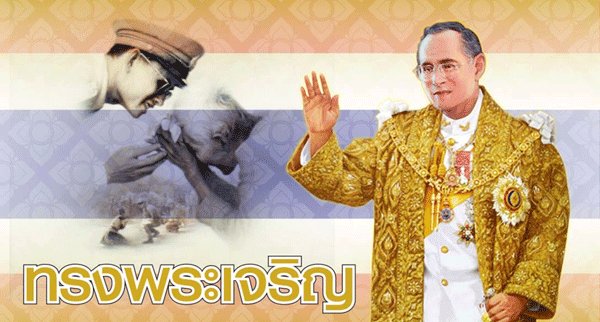
La Mort du Roi de Thaïlande (1927-2016) - Ultime hommage à un grand homme.


Dans la soirée du 13 octobre, l'annonce officielle de la mort du roi de Thaïlande est tombée comme un couperet. Bien que le souverain passait le plus clair de son temps à l'hôpital Siriraj de Bangkok, cette fois-ci le communiqué de la cour royale avait laissé entendre que les complications médicales annoncées n'étaient pas de bonne augure. Les Thaïlandais étaient donc préparés à l'annonce de cette triste nouvelle.
En fait, le communiqué officiel a été fait dans la soirée du 13/10, mais on a su par la suite que le monarque  avait cessé de vivre dans la matinée [correction apportée le 15/10: 15h52 heure locale, selon Le Monde].

Parler de la peine que cette mort annoncée a provoqué dans le cœur de tous les Thaïs, est une tâche bien ardue tant le souverain était révéré par son peuple.  En regardant les images montrées en boucle par les chaînes de télévision, on voit bien que cette disparition est ressentie comme un décés personnel par tous les sujets du royaume. Il est vrai que le roi Bhumibol Adulyadej, qui portait le titre de Rama IX (nom de l'avenue où j'habite), jouissait d'une adoration quasi divine dans le royaume de Thaïlande.
S'il était autant respecté, c'est qu'il n'avait jamais cessé d'œuvrer pour le bien-être se son pays, n'hésitant pas à se déplacer dans les lieux les plus reculés et déshérités du royaume. Les images du monarque, appareil-photo au cou et carnet de notes en main, défilent à la mémoire de tous. Outre le photographe exceptionnel qu'il était et dont j'ai pu apprécier la qualité des photos, Rama IX était aussi un saxophoniste accompli qui a joué dans des orchestres de jazz à maintes reprises dans le passé. En ce XXIe siècle, il était devenu, à 88 ans, le plus vieux monarque de la planète par un long règne de 70 ans. 


Pour les Français et les Suisses, c'était également un souverain francophone
qui continuait à utiliser la langue française avec ses proches collaborateurs à la cour royale. À l'age de 18 ans, alors qu'il poursuivait encore ses études à Lausanne, on était venu le chercher pour lui demander d'accepter la succession du trône de Thaïlande. C'est à Paris aussi qu'il avait rencontré la fille de l'Ambassadeur de Thaïlande en France, elle-même francophone, et qui, devenant son épouse, fut couronnée reine Sirikit. 
L'amitié franco-thaïe.
La disparition du monarque risque fort d'avoir de nombreuses répercussions. Beaucoup de Thaïlandais n'ont connu aucun autre souverain. Le roi Rama IX était perçu comme le ciment d'une nation dont l'instabilité politique de ces dernières décennies était devenue un souci permanent.
Une page de l'histoire du royaume vient d'être tournée. La nervosité des acteurs économiques et des investisseurs montre bien qu'il s'agit là d'une période de transition délicate. Après l'incommensurable deuil national qui ne manquera pas de justifier la tristesse du peuple, il faut espèrer que la Thaïlande pourra poursuivre sa croissance et son développement en toute quiétude.

Honneur et prières à un roi dont la vie fut entièrement dédiée au bien-être de son pays. L'Histoire montrera sans aucun doûte qu'il s'agissait d'un grand homme. Puisse le royaume de Thaïlande poursuivre l'esprit dans lequel le souverain disparu l'avait conduit.